

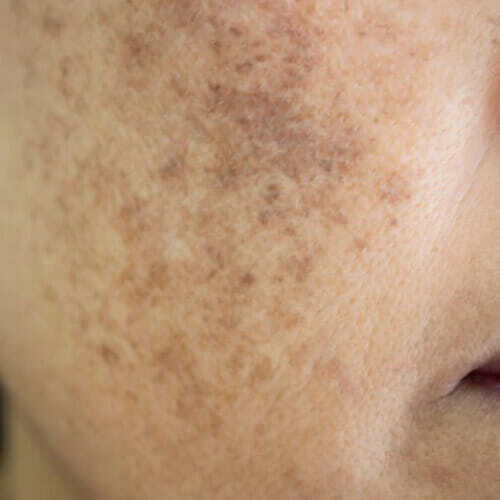
What is hyperpigmentation? The difference between passive and inflammatory
Shedding a light on hyperpigmentation: how to treat those dark spots
Hyperpigmentation is one of the most common skin conditions around, but that doesn’t make it any less concerning when it shows up; entirely uninvited, I might add! In fact, according to recent studies hyperpigmentation is up there with ageing and wrinkles as a top tier skin concern for women. It presents as darker patches on the skin and the reason? Well, unfortunately, there are numerous reasons for hyperpigmentation, some completely out of our control. But we can split it into two main types: passive or inflammatory hyperpigmentation.
What’s the difference between the two types of hyperpigmentation? Passive hyperpigmentation is brought on by hormonal or internal changes, whereas inflammatory pigmentation is flared up by external or environmental factors.
And just as there are numerous causes for both types, there are also lots of different treatments depending not only on the severity (read: stubbornness) of the case, but also any underlying reason for its appearance. But I’ll get to all that a little later. Let’s start at the beginning, shall we.
What is Hyperpigmentation?
Hyperpigmentation is when areas of your skin appear darker than the rest of your skin. It’s a super common skin condition with many different causes. You might have read that first sentence and immediately thought ‘Oh, I’ve got one of those patches!’, and you’re really not alone; recent statistics show that 43% of women in the UK are concerned about hyperpigmentation. But where does it come from, and what can we 43 percenters do about it?
At its root, hyperpigmentation is simply an overproduction of melanin that can cause small patches of darker skin, or in rarer cases, cover large areas. Hyperpigmentation is most common on frequently exposed areas of the skin, like the face, hands and neck; which is exactly why half the population are so concerned about it… It’s not something you can easily hide! Sometimes known as age spots or sun spots, there are many reasons for hyperpigmentation patches to pop up. Often it’s your body’s panicked response to trauma, it floods the area with more melanin than necessary as a result and voila, stubborn dark patch. Whether that trauma is acne, an infection, sun exposure or even pregnancy.
In general, the darker your skin the more likely you are to see the effects of both types of hyperpigmentation. This is because your body is just really amazing at producing melanin: maybe a little too amazing for its own good!
As of yet, there is no miracle cream that can instantly cure hyperpigmentation, although for an effective gentle home treatment pigmentation reducer Cyspera is one of my favourites, along with Skinuva Brite, but there are some amazingly effective treatments and programmes I can offer to lighten the dark spots.
To make things a little easier to explain, I’m going to talk about the two types of hyperpigmentation separately.
What is passive hyperpigmentation?
Passive hyperpigmentation is characterised by dark flat patches on the skin, caused solely by internal factors; changes in your hormones, reactions to medications, or even stress. Just another reason to book that trip to the spa you’ve been promising yourself! Passive hyperpigmentation predominantly appears on the face, but can vary in location, as well as colour and size. And if you’re reading this blog because your passive hyperpigmentation falls on the more severe end of the scale, you’re in the right place. Keep reading for my ultimate solution!
What causes passive hyperpigmentation?
Passive hyperpigmentation is most commonly caused by hormonal changes. One of the most prevalent kinds of passive hyperpigmentation is Melasma; sometimes known as the “mask of pregnancy”, it’s caused by (you guessed it) hormones. Melasma can cause large dark patches, usually on the face. Melasma occurs in up to 70%(!) of pregnant women and in 10–25% of women taking oral contraceptives. It’s something a lot of women don’t even consider until it makes an unwelcome appearance. But don’t worry, I’ve got the perfect treatment to show Melasma the door.
How can you treat passive hyperpigmentation?
Treating passive hyperpigmentation is a little trickier than inflammatory hyperpigmentation because the internal cause must be considered too. Although passive hyperpigmentation conditions like melasma are notoriously difficult to treat, I think I’ve found the perfect solution. The Cosmelan peel is not only incredibly effective for Melasma, but it works on even the most severe skin discolouration and is suitable for all Fitzpatrick I-VI skins. In other words; ALL skin colours. You can read more about my passion for Cosmelan peels over on my blog post ‘Cosmelan Peel: Is It Worth It?’. Spoiler, it’s absolutely worth it!
mesoestetic® Tran3x programme is another cutting edge solution that really lasts. Not only removing the excess melanin build-up but also doing wonderful things for the luminosity and tone of your skin. Paired with topical melanin suppressing skincare products, those dark patches will be noticeably improved! This treatment is more suited to Fitzpatrick skins I-III.
What is inflammatory hyperpigmentation?
Inflammatory hyperpigmentation is caused by external ‘forces’, ones that can sometimes be avoided, or at the very least exposure reduced. This type of hyperpigmentation is the skin’s response to direct trauma (think the marks left behind from a spot!) and they usually show up as smaller dark patches on the skin. These patches can vary in colour from very pale, reddish to deep brown, and even almost grey in colour.
What causes inflammatory hyperpigmentation?
One of the main causes of inflammatory hyperpigmentation is UV damage. And this type of hyperpigmentation is often a long time coming. We’ve all seen the sunscreen adverts, the ones where they cast a wood’s lamp over the sunbather’s faces to reveal the damage lurking beneath the surface. That damage to your dermis (the deeper layers of skin) is caused by the sun stimulating an overproduction of melanin to protect us. The problem for most women becomes apparent when this hyperpigmentation shows up on your epidermis, the skin’s surface level.
Inflammatory hyperpigmentation can be caused by a whole host of other issues though, the most commonly reported being:
• Acne
• Impetigo
• Eczema
• Allergic reactions
• Psoriasis
• Skin infections
How can you treat inflammatory hyperpigmentation?
Treatment for inflammatory hyperpigmentation depends on its cause. Often if you can pinpoint the reason and treat the underlying issue (where possible), the resulting discolouration may be less severe. It’s also worth noting that milder cases may go away on their own. But if you’re finding the discolouration has outstayed its welcome, I have a range of treatments and skincare products to help speed up the process.
• Skin brighteners like Skinuva Brite to help reduce and suppress melanin production.
• To increase skin cell turnover and to lighten and brighten the skin consider the award-winning SkinBetter Science Even Tone Correcting Serum and Alpharet Overnight Cream.
• Chemical peels containing tranexamic acid or azelaic acid are effective for hyperpigmentation. Cosmelan is one of the most effective in-salon pigmentation removal treatments.
But which one is right for you? I strongly believe in taking a holistic approach to every treatment I offer; looking at the root cause of your inflammatory pigmentation will help me determine which treatment will be right for you. I don’t have a one-size-fits-all approach, because your skin is as unique as you are, your treatment should be too. So if you’re looking at my vast range of treatments and feeling a little overwhelmed, don’t worry, I’m here to help!
Is a skincare routine important for hyperpigmentation?
Making sure you have a skincare routine that works for you is key in not only treating existing hyperpigmentation but keeping new dark patches at bay as well. And for me, it starts with something a lot of women tend to forget in their skincare routine, especially in the UK: SPF! Good sun protection should be the cornerstone of any skincare ritual, whether you’re treating hyperpigmentation specifically or just trying to be kind to your skin in general.
UV from the sun not only makes hyperpigmentation worse, and its marks more apparent, but it has a whole host of other detrimental effects on your skin too. Sunscreen, when it’s sunny outside, is a given for most of us, but actually, we should all be wearing an SPF on our skin every single day, come rain or shine. UVA rays are all around us from sunrise to sunset and they come through rain, cloud and glass and are a huge contributing factor to hyperpigmentation and ageing. Did you know that going out in the sun without SPF can undo a year’s worth of work trying to reverse hyperpigmentation? Well…..it can.
A few products to consider for great results:
1. Cleanse: a brightening cleanser such as Revision Skincare Brightening Facial wash
2. Depigmenting products: Environ Mela Even Cream, Environ Mela Prep Lotion and Environ Mela Fade Serum System.
4. Protect: Heliocare Pigment Solution Fluid SPF50
A simple ritual that can be completely tailored to you. But make sure you add that SPF in there if it’s not on your skincare radar already. And if all of that hasn’t convinced you how important it is, email bev@newtbb-co-uk.lhr.stackstaging.com to find out more.
Can The Beauty Bistro help me with hyperpigmentation?
Not only have I sourced the very best topical treatments and skincare products for hyperpigmentation, but my in-salon treatments are also effective for more stubborn patches. So whether you have a milder case that you’d like some advice for, or you’re interested in booking one of my pigmentation removal programmes, getting in touch for a chat is the first step.
Ready to say goodbye to those dark spots for good? Book in for a free consultation today and let’s get started!