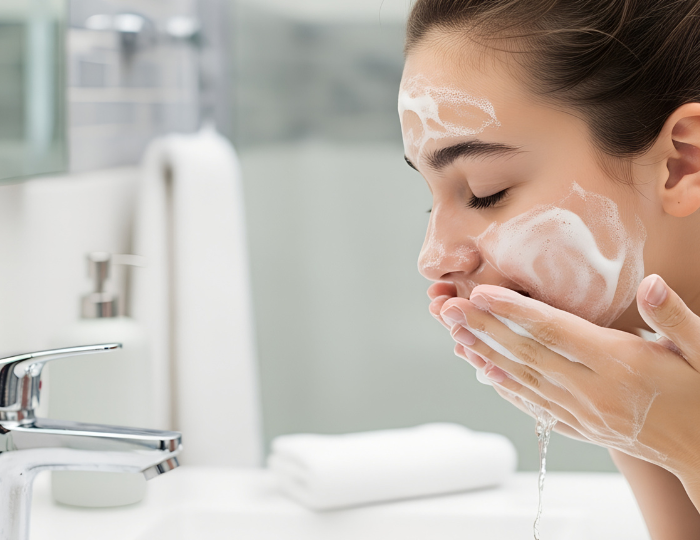
Should You Wash Your Face in the Morning? Separating Skincare Myths from Skin Science
One of the most widely shared skincare trends on social media is the advice to stop washing your face in the morning. This is often discussed in relation to skin physiology and the way your skin naturally repairs itself overnight.
The reasoning sounds convincing. Your skin is supposedly clean because you washed it before bed, and cleansing again is said to remove your natural oils, weaken the skin barrier, and leave it dehydrated.
As a skin specialist, I simply cannot support this piece of advice. Not because cleansing should be aggressive or because more cleansing is always better, but because it ignores one fundamental fact.
Your skin is a living organ.
It remains biologically active twenty-four hours a day, including while you sleep.
Understanding what happens to the skin overnight makes it much easier to see why cleansing it every morning and evening is not only logical but also beneficial.

Myth: Your Skin Is Still Clean When You Wake Up
This is probably the biggest misconception surrounding morning cleansing.
Your evening cleanse removes the day’s accumulation of sunscreen, makeup, pollution, excess sebum and environmental debris. It prepares the skin for your evening skincare routine.
What it does not do is stop your skin from functioning overnight. Understanding skin physiology is key to understanding why morning cleansing remains an important part of a healthy skincare routine.
Whilst you are asleep, your skin continues to produce sebum, secrete perspiration and shed corneocytes as part of the normal process of epidermal renewal. (Corneocytes are specialised, flattened cells that make up the outermost protective layer of the skin. Although they are no longer living, they remain an essential part of the skin barrier, helping to reduce water loss and protect the body from environmental damage. As older corneocytes are shed naturally, they are continually replaced by new ones rising from deeper within the epidermis). Your skin microbiome also remains active, and any products applied before bed continue to interact with the skin surface.
By the time you wake up, the surface of the skin contains a combination of naturally produced sebum, perspiration, corneocytes, residual skincare products and the microorganisms that naturally form part of healthy skin.
This is completely normal. It does not mean your skin is filthy dirty. However, it does mean your skin is no longer in the same condition as it was immediately after cleansing the night before.
Science: The Skin Is Constantly Working
The skin is not simply a protective covering; it is a highly active organ carrying out numerous physiological functions every minute of every day. Sebaceous glands continuously produce sebum to lubricate the skin surface and reduce water loss. Sweat glands continue to produce perspiration, even when it is not visible. Corneocytes are continually shed from the surface of the epidermis through the natural process of desquamation. These processes do not stop during sleep. This is normal skin physiology.
As a result, the skin surface is constantly changing. Morning cleansing simply removes this natural overnight accumulation before fresh skincare products are applied.

Myth: Washing Your Face Removes All of Your Natural Oils
This statement is often repeated but is scientifically inaccurate.
Healthy skin continually produces fresh sebum. Removing excess surface sebum in the morning does not stop the sebaceous glands from functioning, nor does it permanently deprive the skin of the lipids required for a healthy barrier.
The objective of cleansing is not to strip the skin. The objective is to remove excess surface lipids, perspiration and residual skincare products whilst maintaining the integrity of the stratum corneum.
A well-formulated professional cleanser will support skin function, not disrupt it.
Science: The Problem Is Usually the Cleanser, Not Cleansing
One reason this myth has gained popularity is that many people have experienced dry, tight skin after cleansing. That feeling is rarely caused by cleansing itself. More often, it is caused by using an inappropriate cleanser.
Healthy skin has a naturally acidic surface, commonly referred to as the acid mantle, with an average pH of around 4.7 to 5.5. This slightly acidic environment plays an important role in maintaining barrier function, supporting the skin microbiome and regulating the activity of enzymes involved in normal skin renewal.
Traditional soaps are produced by saponification and are naturally alkaline, typically with a pH between 9 and 10. When used on the skin, they temporarily increase the skin’s surface pH. This can disrupt the organisation of the stratum corneum, increase transepidermal water loss, alter the balance of the skin microbiome and impair the activity of enzymes responsible for maintaining a healthy barrier.
Modern professional facial cleansers are formulated very differently.
Most professional cleansers are pH balanced, meaning they are formulated to closely match the skin’s natural acidic environment. Rather than stripping the skin, they use carefully selected surfactants to remove excess sebum, perspiration and residual skincare products while helping preserve the integrity of the skin barrier.
The objective of cleansing is not to remove every lipid from the skin. It is to remove what has accumulated on the skin surface whilst maintaining the conditions that allow the barrier to function normally.
There is an important distinction between stripping the skin and cleansing the skin. They are not the same thing.

Myth: Water Is Enough
Water is great at removing water-soluble substances such as sweat. However, sebum is not water soluble. Neither are many of the emollients, facial oils and occlusive ingredients found in night creams and moisturisers. This is why cleansers contain surfactants.
Surfactants surround lipid molecules, allowing them to mix with water so they can be removed from the skin surface without excessive rubbing. Simply rinsing with water leaves much of this material behind.
Science: Your Morning Skincare Performs Better on Clean Skin
Professional skincare products are formulated to interact directly with the skin. Vitamin C, peptides, antioxidants, serums, moisturisers and sunscreen are all designed to be applied to clean skin. Applying these products over overnight sebum and residual skincare may reduce how evenly they penetrate or spread across the skin. This is particularly important when applying sunscreen.
Effective sun protection depends upon the formation of a continuous, even film across the skin surface. Excess oil and product residue can affect the uniformity of the protective layer.
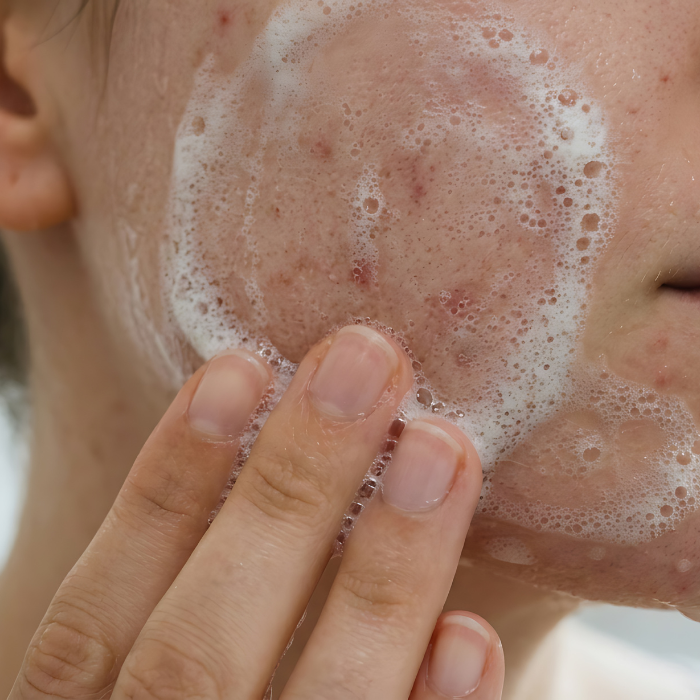
Myth: People With Chronic Skin Conditions Should Avoid Morning Cleansing
This advice has become increasingly common, yet it lacks context. Conditions such as acne, rosacea, seborrhoeic dermatitis and eczema do not stop the skin from producing sebum, perspiration or shedding corneocytes overnight. These physiological processes continue regardless of the underlying skin condition. The answer is not to stop cleansing. The answer is to choose an appropriate professional cleanser for your skin condition.
In my clinical practice, the emphasis is always on selecting products that are compatible with the skin barrier rather than avoiding cleansing altogether. The correct cleanser should remove unwanted surface debris whilst respecting the barrier function and maintaining the skin’s natural acidic pH.
Myth: Cleansing Twice a Day Damages the Skin Barrier
Current evidence does not support the idea that cleansing twice daily with an appropriate cleanser is inherently harmful. What damages the skin barrier is repeated exposure to inappropriate cleansing practices. Such as:
Harsh soaps.
Strong detergents.
Very hot water.
Aggressive exfoliation.
Over-cleansing.
These are the factors that impair barrier function.
Gentle cleansing morning and evening using a cleanser appropriate for your skin condition is entirely consistent with supporting healthy skin physiology.
The Bottom Line
Skincare trends come and go, but skin physiology does not change.
Your skin continues to produce sebum and perspiration and to shed corneocytes throughout the night. Residual skincare products remain on the surface, and the skin microbiome continues to function exactly as nature intended. Morning cleansing is not about removing every trace of the skin’s natural oils. It is about removing the overnight accumulation that is no longer required, preparing the skin for active skincare ingredients and allowing sunscreen to be applied to a clean, balanced surface.
The focus should never be on cleansing less. The focus should be on cleansing correctly with the right product.
Healthy skin is built on understanding physiology, protecting the skin barrier and making decisions based on evidence rather than social media trends.
Despite the popularity of leaving out your morning cleansing routine on social media, there is currently insufficient clinical evidence to support the routine recommendation to omit morning cleansing in healthy skin or chronic skin conditions.
If you need any help choosing the right cleanser for your skin condition, please get in touch…